–––––––––––––––––––––––––––––––––––––––––––––––––––––––––––––––––––––––––
–––––––––––––––––––––––––––––––––––––––––––––––––––––––––––––––––––––––
Showing posts with label Fish. Show all posts

Wednesday, 9 March 2011

Quite a Catch

My second article published in the local magazine, Letchworth Living. (March 2011 edition) www.letchworthliving.co.uk


Cheeky Spouse finds the best of British fish on our doorstep

I absolutely love fish and can’t understand why us British don’t eat more of it. There we are, a group of islands, surrounded by the bountiful sea and we shun what those waters offer up.
For those who do eat fish regularly, there is more than just cod or haddock and as these species are in decline we really do need to think about what we buy.

Recently I went to visit North Hertfordshire's only independent fishmongers, Fish at the Fox, in Willian, which opened last November and occupies the site of what used to be The Food Barn.
It is a grey and rainy day, not at all conducive to high spirits. We park the car in one of the many spaces and dash the short distance to the unassuming white door of the shop. It’s a relief to be in the dry, and the bright and airy interior soon dissolves away the effects of the British elements.

Standing behind the shiny glass counter is Marc Howard who is a great authority on fresh fish. As we're about to shake hands, Marc pauses briefly to wash his hands, having just prepared some sea bass fillets. All clean, we can now carry on with our introductions.
It is clear to me that Marc is passionate about what he sells and knows his stuff. Everything sold at Fish at the Fox is sourced from British waters where possible and Marc assures me that sustainability and seasonality are very important to him. It would be highly unlikely that you'd see an Icelandic cod residing in the counter. Endangered species are avoided completely.


The shop is open from Wednesday through to Saturday and Marc gets new stock in on Wednesday morning and every day if necessary to ensure it’s as fresh as possible. Nothing has had to come too far, either from our East Anglian or south coasts, and Marc can tell you exactly where any of his fish has been landed and by whom. I doubt you'd get that sort of detail from your supermarket. On the wall, behind the counter, pictures of the fisherman that supply the shop, are proudly displayed; a weather beaten Ben, Paul, Cyril and then there’s Richard, who keeps Marc in plenty of oysters and mussels from Brancaster in Norfolk. Seeing the men's coast worn faces really makes you appreciate how your fish gets to your plate.

Casting my eyes over the tempting fish resting on the crushed ice, I start imagining the delicious ways I could eat them. To some, the display could be a shock if you're particularly squeamish. Everything is presented whole, head on and eyes staring. Personally I prefer to see fish this way, you can see how fresh it is – bright gills, shining eyes and moist glistening skin, a confidence that cannot be gleaned from a pre-packaged fillet.

As I examine the brill, gurnard and megrim it occurs to me that I've never even tasted these varieties, not because I’ve not wanted to, but more that I've never been able to obtain them.
Fish can be ugly looking creatures, but I fell in love with the gurnards. Call me a softy, but they have an adorable puppy-like quality to their faces, weird but kind of cute.

Also today, there's a fearsome-looking but chunky hake, a huge sea bass, a prepared meaty monkfish tail, some sizeable skate wings and a group of sardines shimmering like precious silver darts. A bulging net of Palourde clams from Poole nestles at the back. The stock varies from week to week, but a quick phone call or checking on Fish at the Fox's Facebook or Twitter pages will keep you up-to-date with what's in stock.
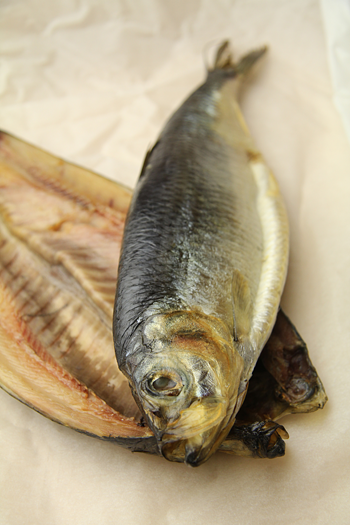

There’s smoked fish too, from Suffolk smokeries. The kippers look very appetising, the whole fish split open has a rich tan colour. It’s properly smoked in the traditional way, a far cry from those often luminous yellow things which have been flavoured with something more laboratorial and shrink-wrapped in plastic with a pat of butter.
A richly hued side of salmon, whole mackerel and trout sit along side. My mouth is already watering and I'm adding them to my mental shopping list.
These fish have been suffused with the flavour of real smoke, the result of having been sat in a black tar-walled shed, filled with the swirling plumes from smouldering
oak chippings.

My lengthy, yet enjoyable chat with Marc reveals what a friendly and helpful chap he is. Keen to show me the latest catch he lovingly lifts the fish from the counter and describes its texture, flavour and even suggests the best cooking methods. We both agree that fish should be done simply and avoid overcooking. To assist customers, there are a number of recipe leaflets on the counter to pick up and take home. All this reflects the care and attention to the produce and the customers.

While I'm there some customers do arrive, and one particular man is so over the moon to pick up his order of crab and oysters, it makes me feel warm and fuzzy inside.
Perhaps I'm a little strange to be so sentimental, but it is touching to be in the company of people who appreciate good produce.

For those not able to make it to the shop, Fish at the Fox now offer a local delivery service. If you live in the Letchworth or Hitchin area and your order is over £15, Marc will deliver for free, bringing fresh fish direct to your door. Now that's a personal touch.

www.fishatthefox.co.uk

Photos: ©childsdesign 2011


Featured on The Artisan Food Trail

Fish Stock


On my visit to Fish at the Fox, Marc gave me a big bag of fish heads and bones to make stock. It really is worth asking your fishmonger if he has any trimmings like this, as homemade stock far surpasses anything you can buy in the shop.
The heads did look rather gruesome, especially the hake head. My slightly morbid curiosity (and interest in biology) took hold and I examined the heads, peering into their mouths, the hake had particularly fearsome teeth, so I kept my fingers well away.

You'll need a big, okay very big pan for this. Rinse the fish heads to remove any blood as this can make your stock slightly bitter in taste. Put the heads and bones ( about a kilogram's worth) into the pot and add a chopped onion, a chopped fennel bulb, about 100g sliced celery, 100g chopped carrot, 25g sliced button mushrooms and a sprig of thyme. Pour in 2.4 litres of water, place on the stove and bring it to the boil, then turn down to a low simmer for about 45 minutes.

Strain the stock through a muslin cloth-lined sieve and store as required. I like to freeze mine in 250ml portions for ease.

Photo: ©childsdesign 2011

Hake Bake


Thinking about what I was going to do with two thick juicy hake steaks from Fish at the Fox, I decided they would be best cooked in the oven. I want to make a whole meal but in the simplest possible way without lots of washing up afterwards and on previous occasions found tray baking to be the best option.

What I like about this method of cooking is that it allows one to be imaginative with flavour combinations with the minimum of fuss.
First you need to find a large roasting tin and get your oven good and hot. Put the tray in the oven to make that very hot too.

Have a rummage around the kitchen and get together a selection of tasty things that go rather well with fish, I chose some chorizo, new potatoes, fennel bulb and some red onions. I cut them into rough chunks, dropped them into a big bowl, tore some tarragon leaves over, seasoned with salt and pepper and tossed them in a good drizzle of cold pressed rapeseed oil.
Remove the hot tray from the oven and tipped in the vegetables and it started to sizzle immediately. Put the tray back in the oven and roast until, turn the vegetables over occasionally until they're cooked all the way through and start to take on some golden edges.

When they're done remove the tray from the oven and sprinkle in a little white wine, place the hake steaks on top and spoon over some of the vegetables juices. Pop back in the oven for about 10-15 minutes or until the fish is done.
Meanwhile make a garnish by finely chopping some flat leaf parsley and lemon zest, stir in some sea salt and fresh ground black pepper.

Serve the fish with the vegetables on the side and sprinkle liberally with the parsley and lemon.

Photo: ©childsdesign 2011

Thursday, 23 September 2010

Kedgeree

This is my version of the old colonial Anglo-Indian breakfast dish. I have never actually eaten it for breakfast, but it does make a very good evening meal.
The combination of smoked haddock, gently spiced rice and boiled eggs is equally good on a summer's day or as a comforting autumnal meal.


Serves 2

Ingredients
250g smoked haddock fillets
1 tablespoon vegetable oil
1 small onion, chopped
1 garlic clove, finely crushed and chopped
1 thumb-sized piece fresh ginger, peeled and grated
4 whole green cardamom pods
half teaspoon cumin seeds
half teaspoon fennel seeds
quarter teaspoon black mustard seeds
2 whole cloves
1 cinnamon stick
1 bay leaf
half teaspoon ground turmeric
pinch ground cayenne pepper
half teaspoon vegetable bouillon powder
142g basmati rice
boiling water
2 eggs, free-range
good handful fresh coriander leaves, roughly chopped
mango chutney, to serve

Method
Bring some water to a simmer in frying pan and place in the haddock. Poach the fish gently for about 8 minutes, until firm to the touch and slightly opaque.
Remove the fish carefully and transfer to a plate. Peel off the skin and flake the fish into largish pieces, taking care to remove any bones. Set aside.

Heat the oil in a large lidded saucepan.
Add the onion and fry gently for a minute or so, add the garlic and ginger and continue to fry gently.
Crush the cardamom pods just enough so that they split. Add them to the pan with the rest of the whole spices and the turmeric and cayenne and stir. Then add the rice and stir until coated. Put in the bouillon powder and pour in enough boiling water to cover the rice. Put on the lid and turn down the heat to the lowest setting. It is best to cook on the smallest ring on your hob.

Boil the eggs for about 5-6 mins so that they still have fairly soft yolks.
When the eggs are done, remove from the heat, drain away the hot water and place the pan under the cold tap. Leave to stand for a few minutes before peeling the eggs and halving them lengthways.
After 15 minutes remove the lid from the pan.The rice should have completely absorbed the water and be fluffy. Add the fish and gently stir in, using a fork, until it is warmed through, then stir in the chopped coriander.
Spoon into large bowls top with the eggs and serve with mango chutney.

Photo: ©childsdesign 2010

Sunday, 1 August 2010

The Artisan Smokehouse


I remember when smoked salmon was such a luxury, that it was the preserve of restaurants and the rich, but in recent times it has become more accessible through the vast quantities stocked in the supermarket.
Due to high demand, it would be fair to say that quality has dropped, so, until you taste the true artisan smoked delicacy, do you realise this to be the case.

At both the Real Food Festival and Foodies Festival, I tried some of the best smoked salmon, I have ever tasted from The Artisan Smokehouse. They are a small family business based just outside Felixstowe on the Suffolk coast.
The care and attention to sourcing the best ingredients through to the simple yet superior curing process, is definitely reflected in the fine flavour and excellent texture of their smoked salmon.
Supermarket varieties have a tendency to be slimy or even soapy and often too salty, but theirs is relatively dry (in a good way) but moist inside. The fish has a nice firmness and the flavour is clean, light and in no way overpoweringly smoky.


As well as the salmon, The Artisan Smokehouse produce a very good smoked beef too. Using meat from Herefordshire-Aberdeen Angus Cross cattle, reared in Suffolk, the result has a great depth of flavour and almost melts in the mouth.
As well as fish and meat, other smoked items include, two types of cheese, a cheddar and a stilton, garlic, kalamata olives and even olive oil which is rather tasty.

I am pleased to see that The Artisan Smokehouse have been recognised by being awarded two gold accolades from The Great Taste Awards – proof that they do produce the finest food.
I'll be looking forward to buying more from them soon, as I see they are listed to be at The Aldeburgh Food and Drink Festival which is marked on my calendar.

For more information and where to buy,
visit their website: artisansmokehouse.co.uk


Featured on The Artisan Food Trail


Photos: ©childsdesign 2010

Tuesday, 29 June 2010

Beauty in the Brine


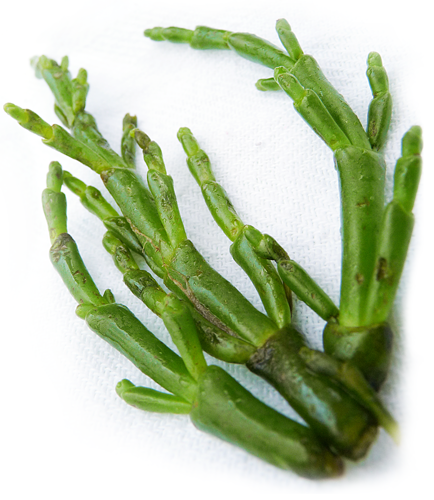
I fell in love with a coastal delicacy last year that has kept me drooling in anticipation for the next season of marsh samphire to return. The small fleshy leaved plant that inhabits the marshes and tidal mudflats of Britain’s shores is very much seasonal and as yet still a wild and uncultivated plant, thus making it a very special food from June until the end of August.

It is gathered by hand, an arduous and back-aching task, by fishermen and shore workers to supplement their summer income.
When I was in North Norfolk, last year, I saw it growing and was tempted to pull on my wellies and venture out into the squelchy mud to pick some for myself. I’m aware that it is not always acceptable to do so, although it is not illegal, one has to consider respect for nature and the environment, especially as the samphire grows on protected habitats.
For this reason, the best samphire grounds are kept secret and only those with permission have access to the green bounty.


Samphire is a type of succulent, perfect for tolerating the salt from each inundating tide. It has short branching stems, with a strange joint-like structure that reminds me of little alien antennae.
As I don’t live on the coast, I don’t often get the chance to buy it. It’s a rare thing to find in the shops around my way, so I almost fell over with excitement when the fish stall at my monthly farmers market was selling it. I bought a couple of generous man-sized handfuls.
Good, fresh samphire should be bright green and shiny, still engorged with moisture. Avoid any that looks dull or withered. It should also smell fresh, tinged with the scent of sea air.

Before eating, it is important to wash it thoroughly in cold water to remove any gritty sand and silt. I took three good washings and drainings to get mine clean.
Samphire doesn’t take much cooking, you can indeed eat it raw, but I like to drop it briefly into boiling water, drain and toss in butter. Don’t add salt to the water and use unsalted butter – the samphire has been seasoned perfectly well by the sea. Finish with a grind of black pepper and eat.

Obviously, samphire is an ideal accompaniment to fish, being juicy, clean flavoured, with just a hint of the briny blue. The very essence of all that is good about our wild coastline.

Saturday, 2 May 2009

Thai (style) Red Curry with Chicken and Prawns


You've probably noticed that I refer to this dish as a Thai 'style' curry, that's because it is my adaptation of an authentic recipe. I really like Thai curries as they are usually quite fresh in taste and I think it's probably the use of lemongrass and fish sauce that gives them a flavour character that sets them apart from Indian curries.

In my exploration of Thai cuisine I found a book in our local charity shop for £5. It's a weighty tome and at that price I just couldn't leave it on the shelf. I have certainly enjoyed reading it. Thai Food by David Thompson is a very comprehensive and informative resource, and now there's not much I don't know about the country's cooking and ingredients. However, there is the small problem of not being able to find those ingredients where I live. I expect if we were to to have well stocked asian supermarket, I would be racing back home with my bag stuffed with snake beans, pea eggplant, pandanus leaves, and water mimosa, but sadly there's nothing like that at my disposal. With that in mind I often choose to make the recipes where I can readily find the components or I adapt them to suit what I can get hold of. Sometimes, it's even difficult to find those Thai cooking kits in the supermarket so I often have to substitute the galangal and use ginger instead.

In the following recipe's instructions you will notice that I suggest using a pestle and mortar to make the paste. You could try using a liquidiser or something similar, but I think that because there's such a small amount, an electric kitchen device would be ineffective. Also pounding and grinding by hand gives a more desirable texture even if it does make a lot of noise and is quite hard work!

Ingredients
for the curry paste

2 long red chillies, deseeded, roughly chopped
1 stem lemongrass, chopped finely
1 inch piece ginger, grated
2 cloves garlic, peeled and grated
1 tablespoon coriander stalks, finely chopped
1/4 teaspoon ground white pepper

the rest…
2 tablespoons vegetable oil
1 small onion, finely chopped
2 chicken thighs, skinless and boneless, cut into inch pieces
1 sweet red pepper such as a capsicum or romano, deseeded and cut into strips
hot water
1 tablespoon fish sauce
4 kaffir lime leaves, dried is fine
1 can coconut milk
1 teaspoon brown sugar
juice of 1 lime
salt to taste
200g raw king prawns
handful coriander leaves, roughly chopped

Method
First make the curry paste.
Using a pestle and mortar, pound the chillies and lemongrass until they are quite fine in texture and reduced to a pulp. Then add the ginger, garlic and coriander stalks and continue to grind until pulped and combined. Finally add the pepper and stir to mix in. Set aside.

Heat the oil in a wok or large frying pan and add the onion, Cook gently until soft, then tip in the curry paste. Stir-fry the paste with the onions until the raw smell of garlic disappears.

Add the chicken and stir-fry for a minute or so until it becomes coated in the spice mixture, drop in the kaffir lime leaves and sweet red pepper strips and pour in some hot water, about enough to scantly cover the meat. Simmer for about 10 minutes until the meat is cooked and the liquid had reduced.

Stir in the coconut milk, sugar and lime juice and continue to simmer, giving it an occasional stir until the sauce has reduced and thickened and become a darker shade.
Add the prawns and heat gently until they turn pink and cooked through.

Finally taste and add some salt if you think it needs it. Stir through the chopped coriander and serve with some steamed Thai jasmine rice and wedges of lime to squeeze over.

Food photo taken from the book

Buy the Book and the Tools

Sunday, 21 September 2008

Grilled Fresh Sardines with Roasted Marinated Vegetables and Gremolata


Sardines are great. It doesn't matter whether they're from a tin or fresh, they're always good. I picked up some Cornish ones the other day, and they were really fresh, smelling of the sea. Their plump silvery bodies looked so inviting.

Although sardines can be eaten whole I prefer not having to deal with any bones whilst eating them, so I set about filleting them. It was very easy as they were of a good size.

Sardines are an oily fish, so something that can stand up to that whilst cutting through the richness was needed to accompany them. Choosing to create a Mediterranean style dish, I slow roasted some tomatoes in the oven, which partly dries them and intensifies the flavour. Just halve some medium sized tomatoes and place them in a baking tray, sprinkle with a little sea salt and sugar and put in a low temperature oven for about 2 hours, or until they have shrunk to about half their original size.
I also cut some red and yellow peppers, courgette, and red onion into large chunks, tossed them in a little olive oil and roasted them in a medium oven until they had softened and taken on some charring at the edges.

The rest was easy. I put the tomatoes and rest of the vegetables into a bowl, added a small splash of red wine vinegar, a good slosh of extra virgin olive oil, a generous pinch of dried oregano, a few capers and lots of freshly ground black pepper.
This I just left to marinade all together while I made the gremolata.

I grated the zest of lemon into a bowl, then add a grated clove of garlic and finely chopped flat-leafed parsley and mixed together well.

All that was left to do was to cook the fish. I laid the glistening sardine fillets, skin side up on a non-stick baking sheet and seasoned with a little salt and pepper. There was no need for any oil – the fish had enough naturally.
Then I put them under a preheated grill on a very high heat, until the skins started to blister and crisp slightly. I didn’t need to turn them over as the fillets were thin enough to allow the heat to penetrate and cook them all the way through.

To serve, I piled the marinated vegetables on to plates along with any liquid and then placed the sardines on top and sprinkled with the gremolata.

Bread was all that was needed to mop up the sweet and succulent juice.

Tuesday, 16 September 2008

The Pearl of Kent: Whitstable


There’s something about the sea that has an instant attraction for me. I’m not sure why, but it has a positive effect on my well-being.
Lately, we’ve both been suffering the strains of modern life, so a long weekend away was in order. Actually my husband likes the sea too so a break by the coast, somewhere, just anywhere was an absolute must.
We decided on Whitstable as it’s not too far to travel but is significantly different to where we live. Neither of us has ever been there before either, although a long time ago, I went on a school field trip to Broadstairs, which is further up the Kent coast.
Whitstable has everything I like about a costal town. It has a working fishing harbour, bringing in some of the finest seafood in the country, oysters in particular, for which it is famed. It isn’t commercialised in the sense that it has those awful amusement arcades and trashy pier attractions. There’s something left of the old days that gives it a true soul and character. I suppose it is so undeniably steeped in history.

Food and Lodging 
It is worth mentioning that we stayed in a bed and breakfast, as we wouldn’t normally choose to do so. Up until recently British B&Bs have had a notorious reputation that has, I confess, put us off in the past. We stayed at The Pearl Fisher, which thankfully blew away all those stereotypical images of old. Our hosts for the weekend, Gary and Jan Hartley-Trigg are a really lovely couple. They were always friendly and attentive but never intrusive.
Our room was tastefully decorated, complete with en-suite, and we were even able to choose a time slot for breakfast. Yes, the breakfast; absolutely fantastic. What a spread; our ‘first course’ consisted of a choice of cereal, fresh fruit and yogurt. Then the ‘second course’, cooked to order. There certainly wasn’t any skimping on the quality here, the bacon was thick and most certainly dry-cured, the sausages were of a high meat content and very tasty and the eggs were expertly scrambled to a beautiful creamy soft texture. Fried mushrooms accompanied this, with fresh grilled tomatoes and some slices of toast. There definitely wasn’t any sign of cutting corners and dashing to the cash and carry, these ingredients had been carefully selected, locally.
Replete with the fabulous Full English, we were then offered toast. We couldn’t refuse as we were itching to try some of the locally made preserves.
Well, that breakfast certainly set us up for the day!
The weather wasn’t particularly kind to us on one day; we were caught in a most torrential downpour of rain. Rivers ran down the streets and trying to shelter in shop doorways did little to keep us dry as the passing traffic sent up great splashes and soaked us even more.
We couldn’t really go anywhere now, as we were too wet! I don’t think sitting in a restaurant would have been good either for us or the proprietor! So it was back to our room via a Chinese takeaway to get changed. By a stroke of luck, our hosts offered to tumble-dry our clothes for us. Like I said, they were very thoughtful and attentive. I would highly recommend the Pearl Fisher to anyone.

Taste of the Sea 
Whitstable has become known as a foodie destination, and justly so, the seafood is first class, but it wasn’t my actual reason for going. Initially, I actually had no idea of its culinary claims, it was only the draw of the coast and it’s quaintness that attracted me. However we did sample some good food, but as I’m not really in the habit of doing restaurant reviews I’ll just say that it was all very good.
Oysters are Whitstable’s famous speciality. Everyday the boats go out to dredge for them, from the beds that are situated about a mile off shore. The catch may also comprise of other shellfish, such as winkles, whelks and cockles, which are sold fresh-caught and cooked at the quayside. It was refreshing to see children eating them, especially these days, when most kids are fussy and won’t touch anything unless it comes with fries from a certain burger chain.
Oysters, or any fish and seafood for that matter, can be rather expensive if bought in any of the restaurants, but if you're not too fussy about enjoying them outside from a plastic plate/cup, then do buy them from the Fish Market or West Whelks on the harbour. This is a sure way of saving some money and sampling top quality sea fare, plus sitting out in the open air with the smell of the sea always seems to improve the taste, I think.

Simple Pleasures
I found Whitstable to be a good place to relax. With no particular agenda to adhere to we spent our time wandering around the harbour and along the shingle beach or browsing the shops and galleries.
The town is an attractive place to artists, and I can see why, as I found it inspiring too. Occasionally, I like to paint and the quality of light and colour and quirkiness of the place has reignited my creative spark. I must get out those paintbrushes.
I get an enormous feeling of satisfaction having walked along the coast. Fresh sea air is so uplifting – you sort of feel exhausted and invigorated at the same time – so that must be a sign of it doing you some good.
Little rest stops here and there allowed us to stare out to sea, watching the windsurfers and fishing boats. Far on the horizon vast container ships, carrying cargo between Dover and Europe, moved slowly past a backdrop of wind turbines sticking out of the Kentish Flats. There’s been much controversy concerning off shore wind farms, but I happen to feel that they are not a blot on the landscape, but rather they’re an interesting feature, besides, this one is sufficiently far away so as not to be intrusive.

Shopping
The High Street has many shops for those looking for something arty or designer orientated. There are a couple of 'junk' shops for the collector, bookshops and clothes boutiques. Whitstable has pretty much everything on a small scale – there are no chain stores that I could see – Canterbury, about seven miles away, is your best option if you want those.
I am fiercely jealous of this town, for such a small place it is well furnished with several decent butchers, fishmongers, greengrocers and bakers. It does have two small supermarkets in the centre, but I could have easily given them a miss.
There’s also the Harbour Village, a kind of market, selling crafts and local produce. I had the impression it was larger from what I’d read, so was a little disappointed. There was, however, a stall selling Kent strawberries and plums, and one of those will be used in a crumble featuring in a future post.

Is it Worth Going Back?
To put it this way, I didn’t want to go home. Three days just didn’t seem long enough.
Now that I’ve seen what Whitstable has to offer, I’d love to return for a longer period of time and maybe stay in self-catering accommodation. I have no qualms about cooking whilst on holiday and would welcome the idea of preparing a meal made from the freshly caught local seafood.
I noticed that there is a “Hands Off Our Harbour” campaign in operation. It would appear that certain developers want to regenerate the harbour into some kind of yuppie haven. Obviously the locals do not want this to happen, and neither do I for that matter, even if I am just a tourist. So just as long as it remains as it did when I last visited, I shall continue to return.

Further Information
Don’t be satisfied with the few pictures in this post, have a look at all of them on my Flickr page here

I highly recommend The Pearl Fisher Bed & Breakfast; it has a list of consistently good reviews on Trip Advisor
You can book online:
www.thepearlfisher.com

For those looking for art and crafts and local produce try:
www.whitstableharbourvillage.co.uk

More information about Whitstable, on what to do, where to eat etc:
www.whitstableonline.com 
www.seewhitstable.com

Friday, 5 September 2008

Seafood Fortnight: 5-21 September 2008


It’s time again for another food awareness day/week/month or whatever. In my experience I’ve found many of these events, are paradoxically under promoted. There seems little point having an awareness week when no one is aware that it’s happening.

As Seafood Fortnight concentrates on the importance of fish, I have decided to give it my full support and attention, just in case it befalls a fate due to lackadaisical PR.
I love fish, you see, and can’t understand why us British don’t eat more of it. There we are, a group of islands, surrounded by the bountiful sea and we shun what those waters offer up.

Okay, fish and chips is supposed to be the nation’s favourite, but to some, I fear, unless the fish is coated in batter and deep fried, they’re not interested in anything else. Don’t get me wrong, good old-fashioned fish and chips are great, but there’s so much more to fish than that.

Which brings me back to the Seafood Fortnight’s approach to getting us to eat more fish. They’ve come up with 2 a week scheme which focuses on the healthy aspect of seafood. To my mind, this isn’t the way to get us all to include more fish in our diets.
Ooh it’s so healthy, packed full of protein and vitamins and omega this and that… Yeah, yeah, we all know that fish is good for us, but if you want people to eat more fish, you’ve got to sell it on merits of flavour and versatility.
I don’t think your average person is going to suddenly start eating more fish because of the health benefits.

Many people are put off fish, as they perceive it to be smelly, bony, slimy, and funny tasting and difficult to prepare.
We need to allay these piscine fears, and this is where the fishmonger comes in. It doesn’t take much to ask the person behind the counter to wield his or her knife over a fish, removing the task of scaling, filleting and any other jobs that we may find repulsive or too tricky to tackle. They can even offer cooking advice too.

I wish all the average shoppers were a little less average and more adventurous, then at least there would be more choice at the fish counter.
That said, I’ve found Morrison’s to have more variety on offer than most supermarkets. Yes, I do agree we should support our small local fishmonger – I would if we had one – but unfortunately, I’m enslaved by the supermarkets, just like everyone else.

Just please eat more fish!… and do try something other than cod or haddock.
Photo: everystockphoto.com

For more information follow the links below:


Saturday, 16 August 2008

Fiskibollur: Fish Balls

Yet another recipe from my kitchen library. I bought the book, Cool Cuisine: Traditional Icelandic Cuisine by Nanna Rögnvaldardóttir, after one of my visits to Reykjavík.
I have tried various recipes for fish balls and this particular one works best.
For such a simple recipe – there are no elaborate flavourings here – it tastes very good, but I couldn't resist adding some chopped fresh chopped dill and parsley.
It's a great way to use cheaper cuts of white fish, and so long as the fish is fresh, you really can't go wrong.
You do, however, really need to use a food processor, as this gives the fine texture to the minced fish.
In addition to the original instructions from the book, I prefer to chill the fish balls prior to cooking them. This helps to firm them up and prevents them from falling apart during frying.


Serves 4

Ingredients
600g white fish fillets, skinned and boned
1 onion, chopped
2 eggs, lightly beaten
100ml milk, or as needed
1½ teaspoons salt
third teaspoon pepper
3 tablespoons plain flour
3 tablespoons potato flour
3 tablespoons vegetable oil and a knob of butter for frying

Method
Place the fish and onion in a food processor and mince finely.
Stir in the eggs, some of the milk and the seasoning.
Stir in the plain flour and potato flour, and add more milk if needed. The mixture should be fairly thick and able to hold it's shape well.
Shape oblong fish balls with a tablespoon and place them on a plate and put into the fridge to firm up for about an hour.
Heat the oil and butter in a frying pan and fry the fish balls over a medium heat until brown on all sides.
Lower the heat, add a little water to the pan, cover with a lid and cook for a few minutes more.
Serve with melted butter, boiled new potatoes and a salad.

Buy the Book
Photo: ©childsdesign 2010

Sunday, 24 February 2008

Seared Pollack Fillet with Caramelised Onions

Yet another recipe from Andreas Viestad's, Kitchen of Light book.
Pollack is a fish that's in season at the moment so it proved a perfect time to use it in this delicious recipe. With cod being a threatened fish, the British public are being urged to try pollack as an alternative, and I can say that nobody would be disappointed with this fish. It's flesh is white and firm, yet flaky and has a clean taste of the sea, not too dissimilar to cod or haddock.
This recipe calls for fish that has its skin left on, but as I bought mine from the supermarket, it had been stripped of its natural covering by a well-meaning fishmonger – why do they do this? Often the skin is essential to imparting a full flavour and not only that, but it turns tantalisingly crispy when seared. Still, my rather naked fillets did manage to stand up well to the gorgeous caramelised onions – the sweetness is perfectly balanced with the clean fresh-tasting pollack.
The onions can be made in advance too and warmed through later.
I served the dish with some simply boiled new potatoes tossed in butter and some chopped flat-leaved parsley and young leaf spinach.

Serves 4


Ingredients
2 tablespoons unsalted butter
6 large yellow onions, cut into third inch slices
2 teaspoons sugar
2 whole cloves
one, 1 and a half pound pollack fillet, skin on, cut into 4 equal pieces
fine sea salt
2 teaspoons all-purpose flour
2 to 3 tablespoons bacon fat or butter
freshly ground black pepper

Method
Heat the butter in a large skillet over a medium heat. Add the onions and cook for 10 minutes, tossing the onions around every one in a while. Add the sugar and cloves and cook for 15 more minutes over medium-low heat, stirring occasionally, until the onions are soft, brown, and sweet. Keep warm over low heat.

Meanwhile, soak the fish in iced water  for 15 to 20 minutes, or place it in a colander in the sink under cold running water for 15 to 20 minutes. Pat the fish dry with paper towels.

Rub the fillets with salt and dredge them in the flour. Heat the bacon fat or butter in a large non-stick skillet. Add the fish, skin side up and cook for 1 minute, then turn and cook for 5 to 7 minutes more until flaky.

Remove the cloves from the onions and discard. Distribute the onions among four plates, place the fish on top, season with pepper and serve.
Photo taken from the book
Buy the Book

Sunday, 10 February 2008

Trout Fillets with Roasted Beetroot and Horseradish & Dill Sauce

More often than not, beetroot is presented in the worst possible way in our British shops. It's either incarcerated in a tight fitting plastic wrap, precooked, soggy and tasteless or floating around in a jar surrounded by a vicious, mouth-puckering acid purporting to be vinegar.
It's not surprising then, that most people loathe this much abused root vegetable.
Beetroot can be quite pleasant if treated with some respect in the kitchen, so naturally I was excited to see fresh bunched ones on sale.


Inspired by the Scandinavian approach to using beetroot, I conjured up a dish that has all the right Nordic elements to create something not only delicious, but a joy to look at as well. There's something wonderful about the gorgeous deep carmine coloured juice that almost bleeds from the roots and stains everything in its path.


Serves 2

Ingredients
For the beetroot
olive oil
500g fresh beetroot
1 teaspoon heather honey
half teaspoon caraway seeds
fews sprigs fresh thyme, leaves only
sea salt
freshly ground black pepper

For the sauce
2 tablespoons plain greek yoghurt
1 tablespoon double cream
2 teaspoons horseradish sauce
2 tablespoons fresh dill, finely chopped

For the trout
2 thick trout fillets, skin on
smoked sea salt, black pepper and lemon rub*
olive oil

Method
Preheat the oven to Gas 5.
Wash, trim and quarter the beetroot and place in a baking dish with a drizzle of olive oil, sprinkle with caraway seeds, thyme and season with salt and pepper, then drizzle over the honey. Add a splash of water, cover the dish with tinfoil and put in the oven for about an hour until the beetroot is tender.

To make the sauce, mix all the the ingredients in a bowl until combined.

Take the trout and rub a small amount of oil on to the skin and then sprinkle on some of the rub and massage in.
Heat a large non-stick frying pan and add a small drop of olive oil, then place in the fish, skin side down and fry gently over a medium heat until the skin becomes crispy and the fish is cooked half way through. Now turn over the fillets and cook for a minute or so more.

Pile the hot beetroot on to plates, place the fish on top and spoon over the sauce.
*

Related Posts with Thumbnails