–––––––––––––––––––––––––––––––––––––––––––––––––––––––––––––––––––––––––
–––––––––––––––––––––––––––––––––––––––––––––––––––––––––––––––––––––––
Showing posts with label Dairy. Show all posts

Tuesday, 14 June 2011

Ripe for Picking


Summer has truly arrived when English strawberries are ripe and ready for picking and although they are now available all year round – with foreign countries supplying our needs – you really can’t beat the fruit from our own soil. For me, reserving them as a seasonal treat makes them so much more special.

I grow a few strawberry plants in my garden and there’s nothing more exciting when lifting up the leaves to find the stems swathed in red juicy jewels. If you’re not much of a gardener or simply lack the space, you can still experience the thrill of the strawberry hunt by visiting one of the many pick your own farms in the area.
When the sun is warm the sweet fragrant smell wafts into the air tempting even the most restrained of individuals to sneak a strawberry into their mouths whilst foraging.

The first berries are not often the sweetest though, I think they lack the depth of flavour that the prolonged spells of sun can give them, that said, I do still love to eat then unadorned. No sugar, no cream, just pure fruit bliss. Plucked straight from the plant whether homegrown or ‘stolen’ they just seem to taste better.
However, dairy produce does create a natural harmony, whether it’s cream, yogurt, creme fraiche or marscapone, you can’t go wrong, but I would never cook a strawberry unless it was in a jam of course.

Strawberries and Cream Sponge Cake
This is the sort of thing I like to make for a summer Sunday treat, just perfect for all the family to enjoy or for when you have friends over.
A light buttery sponge filled with the sweetest of English strawberries and billowing clouds of cream is hard to resist.

Ingredients
200g unsalted butter, softened
200g caster sugar
3 large eggs
2 tsp vanilla extract
200g self raising flour
half teaspoon baking powder
1-2 tablespoons milk
strawberries, hulled and halved lengthways, reserve some whole for decorating the top of the cake
6 tbsp good quality strawberry jam
300ml double cream, lightly whipped
icing sugar to dust

Method
Preheat the oven to 180C / Gas 4.

Grease two 18cm sandwich tins and place a circle of baking parchment in the bottom of each one.

With an electric food mixer beat together the softened butter and sugar until it becomes pale and creamy.

Whisk the eggs and vanilla extract in a jug until slightly frothy.

With the mixer still running, add the eggs by pouring very slowly in a thin stream into the butter and sugar mix. When the mixture is pale, and increased in volume, stop the mixer.

Sieve in a tablespoon of the flour and using a metal spoon carefully fold in to avoid knocking out any air.
Repeat, adding a spoonful at a time until all the flour and baking powder is incorporated.
The mixture should be of a soft dropping consistency. If it seems too stiff, gently fold in some milk.

Divide the mixture between the two cake tins and spread out evenly, smoothing off the tops.

Place in the centre of the oven for 25-30 minutes.
The cakes are ready when they're risen, golden brown and their edges are pulling away slightly from the sides of the tin.

Turn them out on to a cooling rack and carefully remove the baking paper. Leave until completely cool before filling.
Spread one half of the cake with strawberry jam and arrange the strawberry halves over it. Spread over the whipped cream and carefully place the other cake half on top. Arrange some whole strawberries on the top and dust lightly with sieved icing sugar.

Strawberry Facts
There are about 200 seeds in every strawberry.
A 100g serving contains just 50 calories.
In medieval times they were considered an aphrodisiac.
They can help to whiten your teeth.
They are full of a substance called ellagic acid which can help fight cancer.
Eight of them contain more vitamin C than an orange.
They are a member of the rose family.
They were cultivated by the Romans as early as 200 BC.
They can also be white or yellow and some even taste like pineapples.
Food photos: ©childsdesign 2011

My article previously published in Letchworth Living magazine. (June 2011 edition) www.letchworthliving.co.uk

Saturday, 2 October 2010

Total Greek Yogurt


My fridge is never without a pot of natural yogurt resting on its shelf, I would say that it has become an essential store cupboard mainstay. From breakfast to dinner it always has a place in my kitchen, I like to stir it into my morning muesli, make pasta sauces or even put it into cakes or muffins.

Having been asked to try out the full range of Greek yogurts from Total, I've had an interesting time experimenting with it in my cooking. Total is available in three different fat contents; 10%, 2% and for the diet conscious, 0%. They are real Greek yogurts not 'Greek style' that's often sold as the supermarket own brand type, so they are made traditionally and naturally resulting in a thick, creamy and delicious consistency.

All three variants have a clean and not too sour taste which makes them a perfect cream alternative to accompany desserts. There is a new split pot too, with honey to drizzle into 2% fat yogurt, This is absolutely gorgeous. The honey is the real thing, no stretching it further with flavoured sugar syrups and there's a generous amount – great to take anywhere – just remember to pack a spoon.


I found Total easy to cook with, both the 10% and 2% fat versions are very stable when heated, they don't split which can often be the case with other yogurts.
I used some stirred through a pasta sauce I made using chorizo and parsnip which gave just the right amount of creaminess to cling to the tagliatelle.


If you're curious as to how yogurt can be used in cooking take a look at Total's website where there is a vast range of recipes to try.
I made the Labneh balls which are very easy to prepare. Simply strain the 10% fat yoghurt, mixed with salt, through a cloth overnight, to leave a dense fresh cheese and then take pieces of it and roll into balls. I drizzled them with fresh lemon juice and extra virgin olive oil and dressed with fresh mint leaves and thyme sprigs. They are best served with some Mediterranean flatbreads.

There's still more yogurt in the fridge, and luckily it has good keeping qualities while still sealed, so I have more for further cooking adventures.

For further information and recipes etc. visit: www.totalgreekyoghurt.com
Photos: ©childsdesign 2010

Wednesday, 18 August 2010

A Slice of Wales: Hafod Cheese :: Updated ::


I'm of the opinion that if you're going to make something then make it well. Don't cut corners and put the best you have into everything you do. This especially applies to food production – the end result is only as good as what goes into it. In this case if you want the best cheese then you need the best milk.

The people at Bwlchwernen Fawr, Wales' longest certified organic dairy farm make their Hafod cheese using raw (unpasteurised) milk to produce an exceptional cheese. The combination of organic Ayrshire milk and traditional cheese making techniques give Hafod its rich buttery and nutty flavours.


I had the pleasure of tasting Hafod at the Real Food Festival. Sam and Rachel Holden make only one type of cheese that is matured for 16 months and 30 months respectively, to produce two very different results. The younger (mature) version is much like a creamier version of cheddar, with a smooth rich flavour. The more mature (vintage) version is decidedly different. Very flavoursome, strong and nutty, but no mouth burn that you might expect from most mature Cheddars. The taste reminded me of a Gruyere, a telling sign of Hafod's Swiss origins. (A trip to their website tells you more)

A chat with Sam revealed the story about their herd of Ayrshire cows, not noted for being high yield milkers one would wonder why they had chosen this particular breed. When the herd was established they were selected more for their hardiness that would be suited to the farm's climate, but the lower quantity of milk is made up in quality.

Ayrshire milk is much better suited to cheese making with its high butterfat and protein levels, but what makes it more special, is that it has a smaller fat globule size than that of other breeds, thus resulting in a finer, creamier cheese texture.
Sam went on to tell me that as an added bonus Ayrshires are characterful cows, even if it does mean he has to chase them all over the meadow to round them up!


Hafod is available to buy at selected shops, but best of all, you can by online. A slice of 'letterbox' cheese can be posted direct to your door without the need to stay in and wait for the delivery – what a brilliant idea!


For more information on Hafod Cheese and to buy online,
visit their website: hafodcheese.co.uk

Small images taken from Hafod's website


:: UPDATE ::

By way of a thank you to me, for writing this review of their fine cheese, the nice people at Hafod sent me a slab in the post. It was a such a lovely surprise to come back from shopping to find the package sitting on the door mat.


Yes, it really does fit through your door!
The cheese was well wrapped and arrived in good condition after its long journey from Wales and it tasted as good as ever.

Accompanying the cheese was a useful information leaflet too, which was even stamped with a date my cheese was made – very special, indeed.


Featured on 
The Artisan Food Trail

Wednesday, 30 June 2010

Don't Ditch the Dairy


I was asked to take a look at a range of products from Lactofree, in a bid to raise awareness for lactose intolerant people. It's not something I've ever considered before, not being lactose intolerant, myself, but it certainly got me thinking about how on earth people, who do have this problem, manage.

For people with the condition, it can mean unpleasant digestive effects due to them not being able to produce enough of the lactase enzyme.

Lactose is present in many things that you'd not expect, including crisps and biscuits, so it is not easily avoided. There are dairy substitutes such as soya or rice milk, but I know some people who find these unpalatable, forcing them to give up anything milk-like all together.
Of course, dairy produce is important in the diet, being a good source of calcium and other beneficial vitamins, so it seems quite worrying that there are people who are missing out.
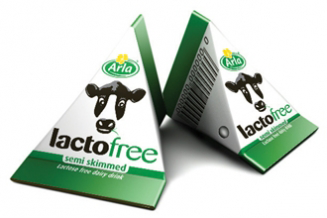
Lactofree's products are real dairy, but completely lactose free, and can be used as any normal dairy product.
The milk, or dairy drink, is great tasting, I couldn't tell the difference between it and regular cow's milk. It worked just the same in tea and coffee and made a great milkshake.

I also tried the semi hard cheese, which has a slightly springy texture, but is creamy in the mouth, with a slightly tangy taste, not unlike Edam. It behaves just like normal cheese and melts well in cooking.
There is a soft white cheese available too, which is great for spreading and would be perfect for making a creamy pasta sauce or for whipping up into frosting for a carrot cake (made with oil instead of butter, of course).

Lactofree have portion packs too, which means a trip to the cafe or on holiday is much easier and you can have the perfect cup of tea or coffee, anytime.
I think this is all great news for lactose intolerant people and it would be fantastic to see Lactofree cream and ice cream added to the range too.
For more information, recipes and advice visit the Lactofree website: www.lactofree.co.uk
Lactofree product images from Lactofree website

Saturday, 12 June 2010

Elderflower Cheesecake


Highly perfumed lacy umbels are adorning the elder trees, begging to lend they're unique flavour to my cooking.
I have tried all the usual recipes from jellies to cordials and everything in between, but I was longing to try something different, which led me to research some ancient uses for the woodland flowers.
During Medieval times, something called Sambocade was prepared as a dessert using curd cheese baked in a tart case. This immediately struck me as something I'd like to make. I doubt my version is anything like the original, but as an experiment, it turned very well indeed, if I may say so myself.
The pastry makes a nice crispy container for the soft, light, fragrant and fluffy cheesecake-like filling. It is not like your usual baked cheesecake, as the texture is not as dense, but I think the lighter consistency makes it all the more summery.

I was perhaps a little lazy on this occasion, as I didn't make my own pastry, but good quality shop bought pastry is just fine and saves some time.
Don't wash your elderflowers, as that will remove all the vital pollen that is essential in giving the wonderful taste, just shake the flower heads to remove any bugs and inspect them carefully. It pays not to be too squeamish, with some insects being so tiny, it is inevitable that you'll end up eating some of them!


Ingredients
500g sweet shortcrust pastry
250g ricotta cheese
2 medium eggs, separated
100g caster sugar
2 tblsp plain flour
2 tblsp double cream
grated zest 1 lemon
3-4 large elderflower heads

Method
Preheat the oven to 190C / 375F / Gas 5.
Roll out the pastry to about 4mm thick and use to line a 20cm round non-stick spring form tin. Work the pastry in so that it fits nicely. It doesn't matter if there are a few folds, just make sure to avoid any holes, although these can be patched up with spare pastry. Leave the pastry roughly hanging over the edges at the top – no need to trim as this will crumble away later for a rustic look. Put into the oven and bake blind for about 10 minutes.

Now the fiddly bit. Pick all the tiny flowers off the stems, discarding the thick green parts. You should now a have a nice pile of free flowing flowers. Set to one side.

In a large bowl, beat together the ricotta cheese, egg yolks, caster sugar, plain flour, double cream and lemon zest. When it is smooth and glossy, stir in the elderflowers and mix well. Set aside.

In another bowl beat the egg whites until they are stiff.
Take a small amount of egg white and stir well into the elderflower mixture. Fold the remaining egg white in, a little at a time, taking care not to knock out the air. When it is all well incorporated, pour into the pastry case and bake in the centre of the oven for about 1 hour.
When the cake is ready it should be risen and golden on top and wobble slightly.
Switch off the oven, but leave the cheesecake in with the door open to cool. The cake will sink slightly with some cracking, but this is normal.
When completely cool, remove from the tin and transfer to a serving plate.

Keep refrigerated.

Photos: ©childsdesign 2010

Saturday, 16 May 2009

Onion Tart with Baked Goat's Cheese


I think we must have a thing for goat's cheese as this is the second recipe I have published here.
I know a lot of people that do not like goat's cheese because it tastes too farm-yardy for them. Indeed, it does have rather a goaty note to it, but that's the appeal for me.

I had two little rounds of Gevrik Goat's Cheese in the fridge and they were edging ever nearer to their use by date. Our local supermarket sells this creamy and nutty flavoured Cornish cheese so on occasion we like to indulge, and one day we had the impulse to drop them into the trolley. Somehow we never got around to eating them soon after buying them, so there they sat in the fridge, nestling next to the cheddar in the cheese box for a good couple of weeks.

Wanting to make something substantial for an evening meal, I decided to make some individual onion tarts to go with the cheese. A sweet onion marmalade is usually a good accompaniment and I thought, why not use that idea but bake the onions in a light puff pastry.
I decided to serve the cheese baked as it's texture becomes so gooey and delicious.

You need lots of thinly sliced onions which you cook slowly and gently in olive oil and butter with a little sugar until they are soft and slightly caramelised. Then add some chopped fresh thyme leaves, a dash of balsamic vinegar and salt and black pepper to taste.

Then cut 2 rounds of puff pastry (I used ready-made) which I placed on to a baking sheet lined with baking parchment. Then make 2 rings of pastry to fit on top of the rounds, stick them on using some a little milk.

Pile the onion mixture into the centre of each and place them in a hot oven until the pastry is risen and golden brown. You'll see that the once flat pastry has now risen up to create a wall around the edges to encase the onions.

You'll need to warm the goat's cheese in the oven. Just pop them on some baking parchment on a tray and cook them until they puff out slightly, but be careful that they're not in the oven too long otherwise they might burst!

You can serve the tarts and cheese with some salad.

Saturday, 20 September 2008

Oh Dear, No Skyr!

We’ve just got back from a very pleasant day on the South Bank in London – there’s a collection of photos here, if you want to look – and I have to say that it has ended on rather a low note.

The problem you see, is that we’ve become hooked on skyr, an Icelandic dairy product, and until we can get back to that beautiful country in the North Atlantic, we have to get our fix when we make the occasional visit into ‘Town’.
Only one shop sells it, or rather sold it, and that’s Whole Foods Market in Kensington High Street (see previous post).

We scoured the chiller cabinet in the dairy section for a very long time, but to no avail. Feelings of desperation set in, so we had to ask a member of staff, who apologetically informed us that they no longer stock it.

Well, we feel very miffed and dejected. Come on Whole Foods Market, what’s happened? Please bring back skyr.
I know that there are a fair number of Icelandic people living in London who are missing it too.

Saturday, 17 May 2008

Warm Crotin Toasts and Figs Roasted with Honey and Thyme


I'm a bit of a fan of goat's cheese and was lucky enough to pick up a pair of little Crotin cheeses in Lidl when they were having  a 'French Week'. 
The cheese is soft in texture and has a nutty full flavour, but not at all sour. The rind is quite edible as it's not long matured.

I decided that it would be good warm, accompanied by something sweet yet savoury on a nice slice of crunchy toast.
For two people I took four fresh ripe figs and cut a cross through the stalk end, being careful not to go all the way to the bottom and place them in an oven proof dish. I then liberally drizzled them with runny honey and then sprinkled on some fresh thyme leaves. I baked them in a moderate oven until they became quite soft.

The toast had to be quite special, so I used sour dough bread for its depth of flavour. I cut four slices (my loaf was quite small) and then toasted them lightly on both sides. I put these on a baking tray and then sliced each Crotin into four pieces and lay two bits per piece of toast and put in the oven for a few minutes until the cheese was warm and soft.
While they were cooking I made a simple dressing with balsamic vinegar, extra virgin olive oil and Dijon mustard.

I then removed the toasts from the oven and put on to plates, spooned the figs, along with their sweet juices on top of the cheese. All it took to finish of was to add some mixed salad leaves with the dressing drizzled over.
Related Posts with Thumbnails