–––––––––––––––––––––––––––––––––––––––––––––––––––––––––––––––––––––––––
–––––––––––––––––––––––––––––––––––––––––––––––––––––––––––––––––––––––
Showing posts with label Cheese. Show all posts

Wednesday, 18 August 2010

A Slice of Wales: Hafod Cheese :: Updated ::


I'm of the opinion that if you're going to make something then make it well. Don't cut corners and put the best you have into everything you do. This especially applies to food production – the end result is only as good as what goes into it. In this case if you want the best cheese then you need the best milk.

The people at Bwlchwernen Fawr, Wales' longest certified organic dairy farm make their Hafod cheese using raw (unpasteurised) milk to produce an exceptional cheese. The combination of organic Ayrshire milk and traditional cheese making techniques give Hafod its rich buttery and nutty flavours.


I had the pleasure of tasting Hafod at the Real Food Festival. Sam and Rachel Holden make only one type of cheese that is matured for 16 months and 30 months respectively, to produce two very different results. The younger (mature) version is much like a creamier version of cheddar, with a smooth rich flavour. The more mature (vintage) version is decidedly different. Very flavoursome, strong and nutty, but no mouth burn that you might expect from most mature Cheddars. The taste reminded me of a Gruyere, a telling sign of Hafod's Swiss origins. (A trip to their website tells you more)

A chat with Sam revealed the story about their herd of Ayrshire cows, not noted for being high yield milkers one would wonder why they had chosen this particular breed. When the herd was established they were selected more for their hardiness that would be suited to the farm's climate, but the lower quantity of milk is made up in quality.

Ayrshire milk is much better suited to cheese making with its high butterfat and protein levels, but what makes it more special, is that it has a smaller fat globule size than that of other breeds, thus resulting in a finer, creamier cheese texture.
Sam went on to tell me that as an added bonus Ayrshires are characterful cows, even if it does mean he has to chase them all over the meadow to round them up!


Hafod is available to buy at selected shops, but best of all, you can by online. A slice of 'letterbox' cheese can be posted direct to your door without the need to stay in and wait for the delivery – what a brilliant idea!


For more information on Hafod Cheese and to buy online,
visit their website: hafodcheese.co.uk

Small images taken from Hafod's website


:: UPDATE ::

By way of a thank you to me, for writing this review of their fine cheese, the nice people at Hafod sent me a slab in the post. It was a such a lovely surprise to come back from shopping to find the package sitting on the door mat.


Yes, it really does fit through your door!
The cheese was well wrapped and arrived in good condition after its long journey from Wales and it tasted as good as ever.

Accompanying the cheese was a useful information leaflet too, which was even stamped with a date my cheese was made – very special, indeed.


Featured on 
The Artisan Food Trail

Wednesday, 30 June 2010

Don't Ditch the Dairy


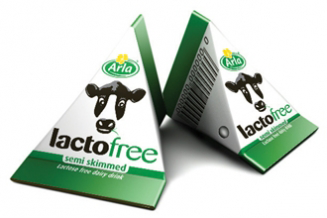
I was asked to take a look at a range of products from Lactofree, in a bid to raise awareness for lactose intolerant people. It's not something I've ever considered before, not being lactose intolerant, myself, but it certainly got me thinking about how on earth people, who do have this problem, manage.

For people with the condition, it can mean unpleasant digestive effects due to them not being able to produce enough of the lactase enzyme.

Lactose is present in many things that you'd not expect, including crisps and biscuits, so it is not easily avoided. There are dairy substitutes such as soya or rice milk, but I know some people who find these unpalatable, forcing them to give up anything milk-like all together.
Of course, dairy produce is important in the diet, being a good source of calcium and other beneficial vitamins, so it seems quite worrying that there are people who are missing out.
Lactofree's products are real dairy, but completely lactose free, and can be used as any normal dairy product.
The milk, or dairy drink, is great tasting, I couldn't tell the difference between it and regular cow's milk. It worked just the same in tea and coffee and made a great milkshake.

I also tried the semi hard cheese, which has a slightly springy texture, but is creamy in the mouth, with a slightly tangy taste, not unlike Edam. It behaves just like normal cheese and melts well in cooking.
There is a soft white cheese available too, which is great for spreading and would be perfect for making a creamy pasta sauce or for whipping up into frosting for a carrot cake (made with oil instead of butter, of course).

Lactofree have portion packs too, which means a trip to the cafe or on holiday is much easier and you can have the perfect cup of tea or coffee, anytime.
I think this is all great news for lactose intolerant people and it would be fantastic to see Lactofree cream and ice cream added to the range too.
For more information, recipes and advice visit the Lactofree website: www.lactofree.co.uk
Lactofree product images from Lactofree website

Saturday, 12 June 2010

Elderflower Cheesecake


Highly perfumed lacy umbels are adorning the elder trees, begging to lend they're unique flavour to my cooking.
I have tried all the usual recipes from jellies to cordials and everything in between, but I was longing to try something different, which led me to research some ancient uses for the woodland flowers.
During Medieval times, something called Sambocade was prepared as a dessert using curd cheese baked in a tart case. This immediately struck me as something I'd like to make. I doubt my version is anything like the original, but as an experiment, it turned very well indeed, if I may say so myself.
The pastry makes a nice crispy container for the soft, light, fragrant and fluffy cheesecake-like filling. It is not like your usual baked cheesecake, as the texture is not as dense, but I think the lighter consistency makes it all the more summery.

I was perhaps a little lazy on this occasion, as I didn't make my own pastry, but good quality shop bought pastry is just fine and saves some time.
Don't wash your elderflowers, as that will remove all the vital pollen that is essential in giving the wonderful taste, just shake the flower heads to remove any bugs and inspect them carefully. It pays not to be too squeamish, with some insects being so tiny, it is inevitable that you'll end up eating some of them!


Ingredients
500g sweet shortcrust pastry
250g ricotta cheese
2 medium eggs, separated
100g caster sugar
2 tblsp plain flour
2 tblsp double cream
grated zest 1 lemon
3-4 large elderflower heads

Method
Preheat the oven to 190C / 375F / Gas 5.
Roll out the pastry to about 4mm thick and use to line a 20cm round non-stick spring form tin. Work the pastry in so that it fits nicely. It doesn't matter if there are a few folds, just make sure to avoid any holes, although these can be patched up with spare pastry. Leave the pastry roughly hanging over the edges at the top – no need to trim as this will crumble away later for a rustic look. Put into the oven and bake blind for about 10 minutes.

Now the fiddly bit. Pick all the tiny flowers off the stems, discarding the thick green parts. You should now a have a nice pile of free flowing flowers. Set to one side.

In a large bowl, beat together the ricotta cheese, egg yolks, caster sugar, plain flour, double cream and lemon zest. When it is smooth and glossy, stir in the elderflowers and mix well. Set aside.

In another bowl beat the egg whites until they are stiff.
Take a small amount of egg white and stir well into the elderflower mixture. Fold the remaining egg white in, a little at a time, taking care not to knock out the air. When it is all well incorporated, pour into the pastry case and bake in the centre of the oven for about 1 hour.
When the cake is ready it should be risen and golden on top and wobble slightly.
Switch off the oven, but leave the cheesecake in with the door open to cool. The cake will sink slightly with some cracking, but this is normal.
When completely cool, remove from the tin and transfer to a serving plate.

Keep refrigerated.

Photos: ©childsdesign 2010

Wednesday, 5 August 2009

Brittany Break

I've recently returned from a trip to Brittany in France, and what an eye opener it has been. Seeing how the locals live has made me think about what is sadly lacking from our everyday lives here in the UK.


We stayed in in the small town of Lanvollon which is in the department of Côtes d'Armor. It's a lovely quiet place away from the hustle and bustle of the tourist towns, but for somewhere so seemingly laid back it has all the amenities including a fantastic supermarket. Considering the fact that Super U is a chain supermarket, which could be compared to our very own Sainsbury's or Tesco, it far supercedes our British counterparts. The quality and range of produce is astounding. I found myself almost giddy with excitement when I saw the fresh fish counter, and as Brittany is fringed by such a beautiful and bountiful coastline, it should have been no surprise really. We bought some locally caught moules (that's mussels to you and me) which we ate that evening, just simply done with some shallots, parsley, white wine and butter. They were deliciously sweet and tender.

Butter is big in Brittany and features heavily in many regional baked goods. I'm even thinking that if I can't buy the best croissants at home then I'm not going to bother with them again. Proper French croissants are flaky on the outside, soft in the middle and so buttery, you don't need anything else with them. As for the Breton cake, well that was melt-in-the-mouth heaven. I knew of the local cake and I even have a recipe for it, torn from a magazine, tucked away somewhere, but I had never tried it until now. We bought one that had some prune purée in between its shortcake-like layers – very nice.
Something I discovered about traditional Brittany butter is that there is never an unsalted variety. The Bretons like their butter salted and probably more so than we do, but there is a half-salted version for the more health conscious! Some types even contain little crunchy sea salt crystals.

Despite Brittany having a large dairy farming industry it doesn't make any cheese, which I find rather odd, but being in France there's no shortage from other regions. We found some delicious Comte, not just one type as you you'd maybe see in your local deli, but several, each having been differently aged.

Cheese of course, needs some bread to accompany it and a rich-tasting crusty baguette was in order. I like bread, but I love real French bread - it's just so tasty. Bread is an obvious daily requirement in the Breton home as it's not uncommon to see someone go out every day just to pick up a loaf. On a Sunday too, as the boulangerie is open well into the afternoon.
Baking seems to be an integral part of French life as there seems to be a boulangerie, patisserie or biscuiterie at every turn. Why isn't everyone fat in France with such a rich diet? That'll be the French Paradox then. I'm betting that all those fresh fruit and vegetables help negate the bad effects... oh and the wine is reputably beneficial of course.

Brittany is certainly a very picturesque part of France and is strangely reminiscent of Cornwall and Devon with its craggy coves, fishing villages and sandy beaches. The open countryside is grazed by cows and there are fields of maize and globe artichokes. The artichokes make for an interesting and attractive crop, I think.
I definitely fell in love with the area, especially the coast, so its marked for a revisit in the not so distant future.

For more pictures click here

Saturday, 16 May 2009

Onion Tart with Baked Goat's Cheese


I think we must have a thing for goat's cheese as this is the second recipe I have published here.
I know a lot of people that do not like goat's cheese because it tastes too farm-yardy for them. Indeed, it does have rather a goaty note to it, but that's the appeal for me.

I had two little rounds of Gevrik Goat's Cheese in the fridge and they were edging ever nearer to their use by date. Our local supermarket sells this creamy and nutty flavoured Cornish cheese so on occasion we like to indulge, and one day we had the impulse to drop them into the trolley. Somehow we never got around to eating them soon after buying them, so there they sat in the fridge, nestling next to the cheddar in the cheese box for a good couple of weeks.

Wanting to make something substantial for an evening meal, I decided to make some individual onion tarts to go with the cheese. A sweet onion marmalade is usually a good accompaniment and I thought, why not use that idea but bake the onions in a light puff pastry.
I decided to serve the cheese baked as it's texture becomes so gooey and delicious.

You need lots of thinly sliced onions which you cook slowly and gently in olive oil and butter with a little sugar until they are soft and slightly caramelised. Then add some chopped fresh thyme leaves, a dash of balsamic vinegar and salt and black pepper to taste.

Then cut 2 rounds of puff pastry (I used ready-made) which I placed on to a baking sheet lined with baking parchment. Then make 2 rings of pastry to fit on top of the rounds, stick them on using some a little milk.

Pile the onion mixture into the centre of each and place them in a hot oven until the pastry is risen and golden brown. You'll see that the once flat pastry has now risen up to create a wall around the edges to encase the onions.

You'll need to warm the goat's cheese in the oven. Just pop them on some baking parchment on a tray and cook them until they puff out slightly, but be careful that they're not in the oven too long otherwise they might burst!

You can serve the tarts and cheese with some salad.

Saturday, 17 May 2008

Warm Crotin Toasts and Figs Roasted with Honey and Thyme


I'm a bit of a fan of goat's cheese and was lucky enough to pick up a pair of little Crotin cheeses in Lidl when they were having  a 'French Week'. 
The cheese is soft in texture and has a nutty full flavour, but not at all sour. The rind is quite edible as it's not long matured.

I decided that it would be good warm, accompanied by something sweet yet savoury on a nice slice of crunchy toast.
For two people I took four fresh ripe figs and cut a cross through the stalk end, being careful not to go all the way to the bottom and place them in an oven proof dish. I then liberally drizzled them with runny honey and then sprinkled on some fresh thyme leaves. I baked them in a moderate oven until they became quite soft.

The toast had to be quite special, so I used sour dough bread for its depth of flavour. I cut four slices (my loaf was quite small) and then toasted them lightly on both sides. I put these on a baking tray and then sliced each Crotin into four pieces and lay two bits per piece of toast and put in the oven for a few minutes until the cheese was warm and soft.
While they were cooking I made a simple dressing with balsamic vinegar, extra virgin olive oil and Dijon mustard.

I then removed the toasts from the oven and put on to plates, spooned the figs, along with their sweet juices on top of the cheese. All it took to finish of was to add some mixed salad leaves with the dressing drizzled over.

Sunday, 27 January 2008

Roquefort Cheese, Pear and Potato Pie

You've really got to like blue cheese to eat this, and I know I certainly do. Roquefort and pear have always been perfect companions in salads, so why not in a pie. I wanted to create something that was quite rustic rather than cordon bleu, so opted to leave the potatoes and pears with their skins on. The pastry is very much 'country-style,' spelt flour adding its wholesome nuttiness to the whole pie.
It's not obligatory to use Roquefort – Dolcelatte or Stilton would be just as good.

Serves 4-6

Ingredients
For the pastry
4oz plain flour
4oz spelt flour
1 teaspoon baking powder
4oz butter, cold from the fridge, cubed
a little cold water

For the pie filling
10oz new potatoes or salad potatoes (no need to peel)
1 tablespoon olive oil
1 large onion, sliced
1 garlic clove, finely crushed
half glass white wine
1 heaped tablespoon plain greek yoghurt
4oz of Roquefort cheese
1 pear - Williams variety is good, core removed and sliced (no need to peel)
freshly ground black pepper

For the crumble topping
1 teaspoon olive oil
2oz pine nuts
2oz fresh white breadcrumbs
1 teaspoon fresh rosemary, finely chopped
salt and freshly ground black pepper

Equipment
one,  8 inch diameter, 2 inch deep, round cake tin

Method
For the pastry
Sieve the flours and baking powder into a large bowl, add the butter and rub into the flour with your fingertips, until it resembles breadcrumbs. Then add a drop of water and stir into the mixture with a fork. Work lightly to bring together into a ball. Be careful not to make the dough too wet. Using your hands, work the dough into a ball. Wrap it cling film and put into the fridge for an hour to chill. This will make it easier to roll later.

For the pie filling
Heat the oil in a frying pan, add the onions and fry gently until golden, add the garlic and continue to cook for another minute or so. Pour in the wine and simmer until it has completely evaporated. Transfer the onions to a large bowl to cool, keep the frying pan, unwashed, for using later.
Meanwhile, boil the potatoes for about 15 minutes or until the sharp point of a knife pierces one easily. Drain, and allow to cool slightly, before slicing them into big pieces.
Add the potatoes to the onion mixture, stir in the yogurt and season with pepper.

For the crumble topping
Heat the oil in the frying pan you used for the onions, tip in the pine nuts and fry gently until they become slightly golden, add the breadcrumbs and rosemary and continue to fry until the breadcrumbs are golden. Remove from the heat and season with salt and pepper.

Preparing your cooking tin and pastry case
You'll see from the photos, that I've used folded aluminium foil strips in the tin. This was intended to assist the removal of the pie. I'm going to make a confession — although this should have worked in principle, I had to resort to turning the pie out by putting a tin over the top and turning it upside-down, and then inverting it back on to a plate. When I tried to use the foil to lift it out, as originally intended, it proved to be rather difficult and may have resulted in certain breakage!

Grease the tin. Place the chilled dough on a floured work surface and roll out so that it's big enough to line the tin. Place the pastry into the tin, making sure it fits against all the surfaces. Trim away the excess pastry.

Assembling the pie
First, tip in the onion and potato mixture so it covers the bottom evenly, then crumble the cheese over. Arrange the pear slices on top and sprinkle over the crumble topping. Push a few rosemary sprigs into the top.
Place on the middle shelf of a preheated oven, Gas 4 for about an hour. iceland reykjavik norway sweden reykjavik finland
Remove from the oven and leave to stand in its tin for 5 minutes before turning out.
Serve cut into wedges with a green salad.
Related Posts with Thumbnails